BCI Engineering and Neurotechnology Demonstrations
Ke Zhang · Neural Engineering at UIUC
Selected work in real-time EEG acquisition, synchronized experiment workflows, closed-loop BCI interaction, and cerebrovascular neurostimulation planning. Seeking a Summer 2027 internship in BCI engineering, neurotechnology, research engineering, or software engineering.
Lead demonstration · 00:19.7Visual summary: A participant wearing an EEG cap sits beside live signal monitoring and a racing-style interactive environment. No audio is needed.
64 channels
Real-time EEG platform
3 EEG hardware ecosystems
Unified acquisition workflows
Metrics describe internship work at Omni-Intel / SUSTech NCC Lab.
Four views of neurotechnology engineering work
01
Real-Time BCI Control
01:05.9 A split-screen view keeps raw EEG traces, the live software setup, and the vehicle-control environment visible at the same time. No audio is needed.
Purpose
Demonstrate a closed-loop EEG interaction in which neural data is processed during a live vehicle-control task.
My contribution
Developed and integrated subject-specific motor-imagery decoding workflows, real-time data handling, and the software pathway from neural output to interactive control.
Setup
Real-time EEG acquisition and live decoding shown alongside a Unity-based racing environment. The video also shows raw signal monitoring during the task.
What to watch
The simultaneous view of live EEG traces, software status, and the vehicle environment. It demonstrates that data acquisition and application control were operating within one live workflow.
Technical notes
Public scope: this portfolio shows the system-level workflow, not evaluation metrics or model parameters.
The recording documents the integrated workflow; it does not independently establish a particular accuracy, latency, or causal decoding result.
02
NeuroScope Experiment Workflow
00:58.7 Arithmetic stimuli change while NeuroScope remains active with signal and experiment-status information. No audio is needed.
Purpose
Show a real-time EEG experiment workflow combining visual task presentation, signal monitoring, and session control.
My contribution
Developed NeuroScope, a 64-channel platform unifying acquisition, stimulation, event synchronization, visualization, and analysis across 10 BCI paradigms and three EEG hardware ecosystems.
Setup
A desktop task presents arithmetic stimuli while the software displays real-time electrophysiological signals and experiment status.
What to watch
The task stimuli change while the acquisition interface remains active, illustrating the workflow from paradigm presentation through signal monitoring and recording.
Technical notes
Public scope: the video demonstrates task presentation and an EEG software workflow; it does not identify hardware, marker transport, sampling rate, or whether the trace is live.
The hardware shown is not identified as OpenBCI without confirmation.
03
Research Use and OpenBCI Pilot
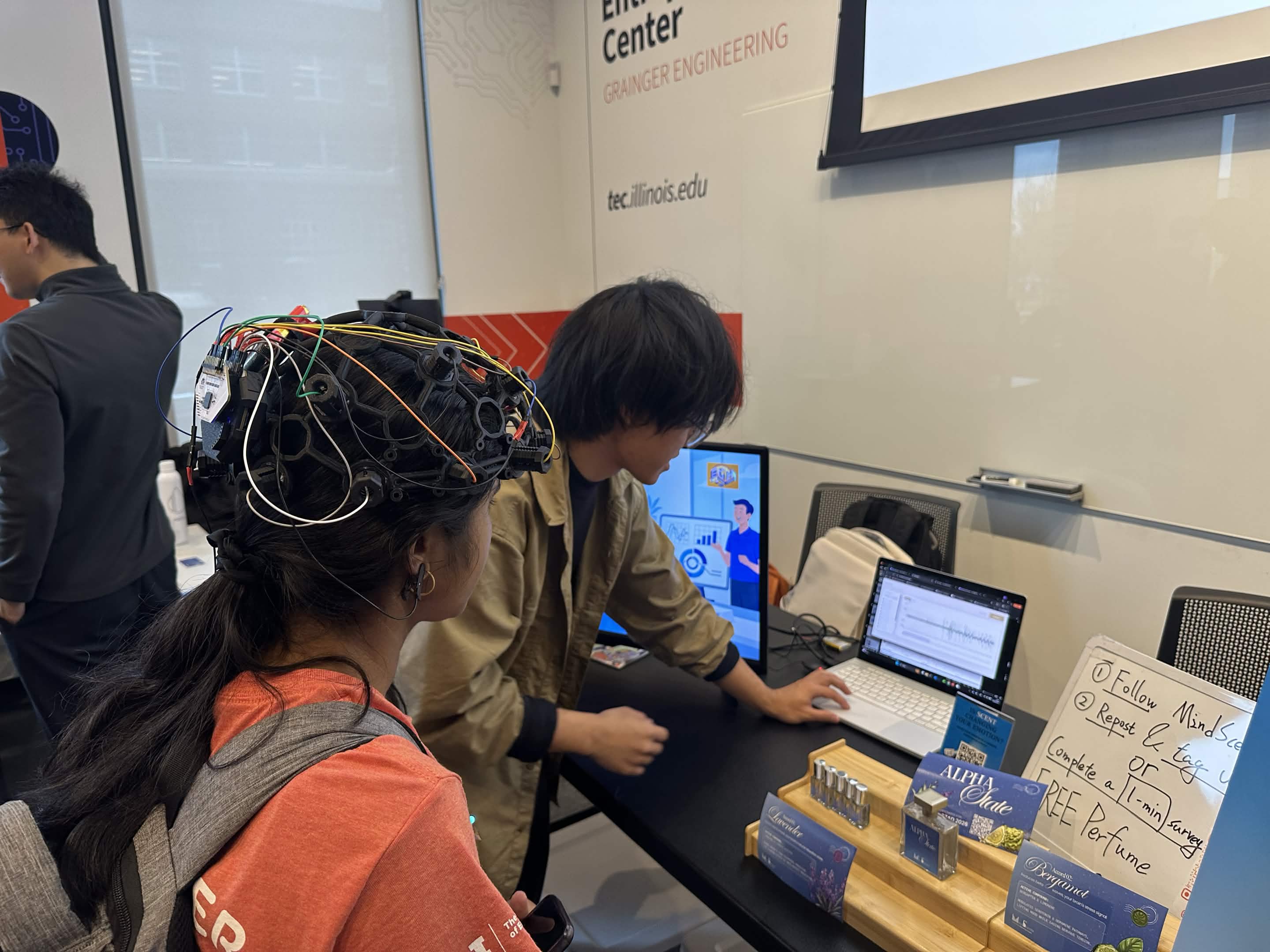
MindScents demonstration, UIUC Engineering Open House. Photo shown as research context; it is not a photograph of the OpenBCI pilot setup.
Purpose
Connect EEG software development with the practical needs of human-subject research.
My contribution
Founded MindScents, a student-led project studying individualized neural and affective responses to scent stimulation. I have also conducted an EEG pilot study using OpenBCI hardware.
Setup
The image shows a MindScents demonstration at UIUC Engineering Open House. Separately, the OpenBCI pilot involved EEG acquisition followed by filtering and artifact rejection.
What to watch
This project context shows how acquisition tools, signal quality, experimental design, and interpretable outputs must work together for real researchers and participants.
Technical notes
OpenBCI publicly documents EEG hardware configurations up to 16 channels. This portfolio does not publish the pilot's board model, montage, sampling rate, or preprocessing settings.
04
Cerebrovascular Neurostimulation Planning
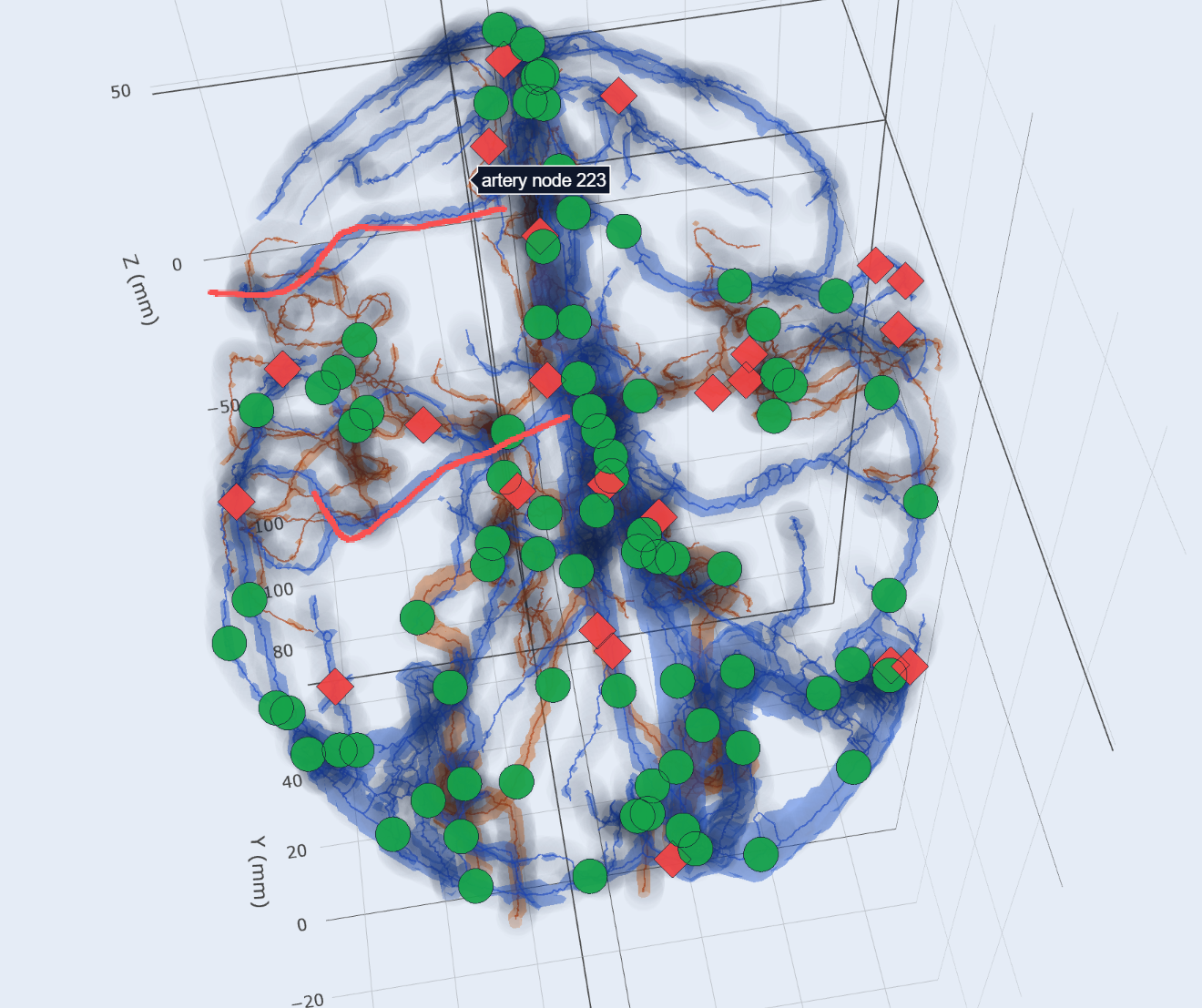
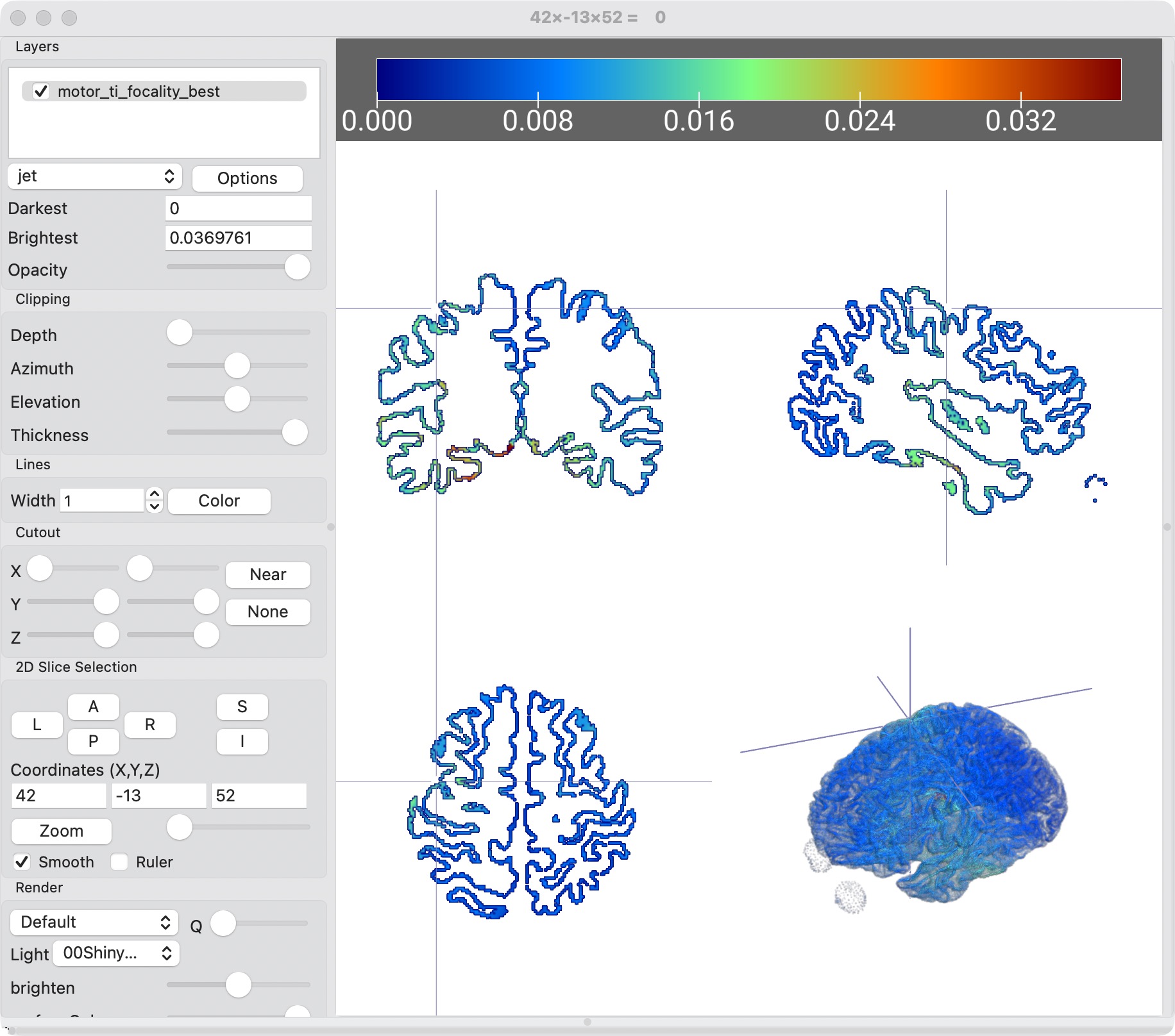
Candidate-site overview Arterial and venous geometry with MOVEA candidate locations in a three-dimensional review view.Cortical correspondence A computed spatial view, not a clinical effect-size or stimulation-coverage map.
Purpose
Plan candidate endovascular neurostimulation locations and inspect their spatial correspondence to cortical anatomy.
My contribution
Designed the Vascular–Brain Region Explorer and contributed to MOVEA, a MIDA-based cerebrovascular planning and simulation workflow, including work supporting a related Chinese patent application.
Setup
The workflow screens candidate locations against access-path length, bottleneck diameter, cumulative curvature, and spatial coverage, then makes candidate and vessel-chain geometry inspectable in an interactive browser.
What to watch
Select a candidate or continuous vessel chain to inspect nearest MIDA anatomy, local cortical surface correspondence, and atlas-label summaries while keeping the mapping limits visible.
The explorer contains 116 candidate sites across 578 continuous vascular chains.
The current MIDA-to-standard-atlas registration remains pending anatomical landmark QA; the display reports spatial correspondence only.
Scientific context: preclinical endovascular stimulation work found that proximity to target cortex was important for localized responses. This project is a planning and analysis tool—not proof of electric-field coverage, functional activation, clinical efficacy, or validated anatomical localization. Read the study ↗
Relevant to BCI and Neurotechnology Teams
Team focus
Relevant experience
Reliable biosignal acquisition and signal quality
Real-time EEG platform development, live signal monitoring, pilot-study preprocessing
Event timing and experiment workflows
Synchronized data pipelines, paradigm execution, automated timing and data-integrity tests
Developer-facing research tools
NeuroScope acquisition, visualization, analysis, and reproducible data workflows
Interactive biosensing applications
Motor-imagery decoding connected to Unity-based control
Researcher perspective
MindScents experimental design and hands-on EEG pilot work with OpenBCI hardware
Computational neurostimulation planning
MIDA-based candidate screening, vessel-to-cortex spatial correspondence, and interactive review tooling
I am particularly interested in contributing to EEG software, signal-processing validation, data-quality workflows, and developer tools that help researchers build reliable interactive applications.